


Create PDF quotation for this product
Hint: You can add multiple products to the cart and create a quotation in the cart. For logged in users the link will generate a quotation with their address.
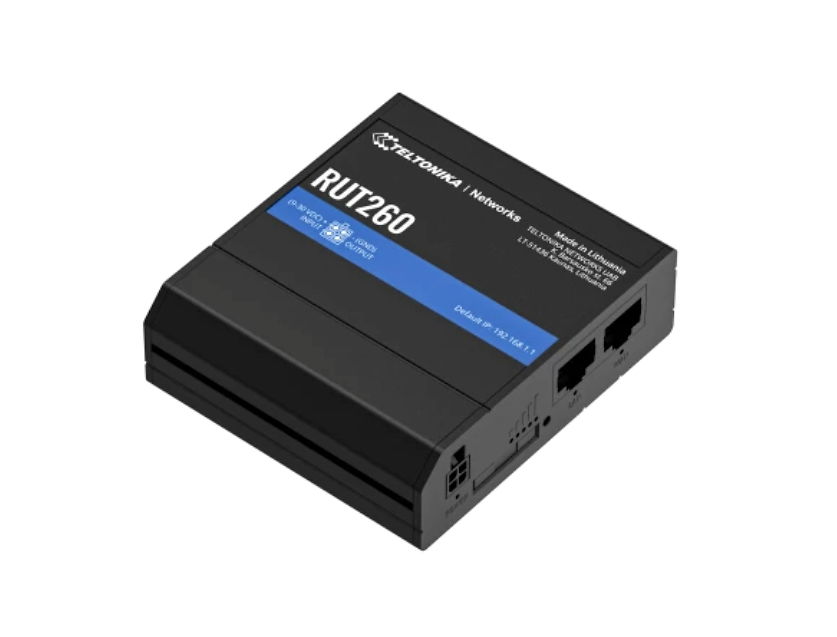
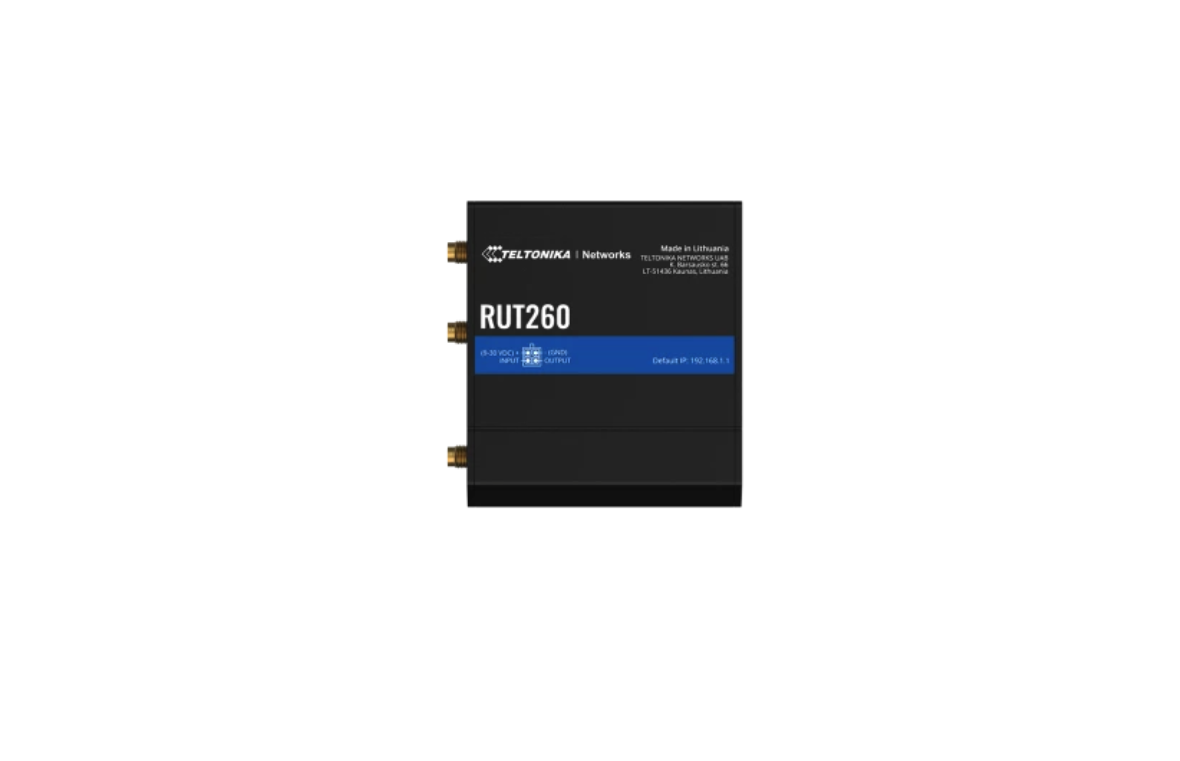
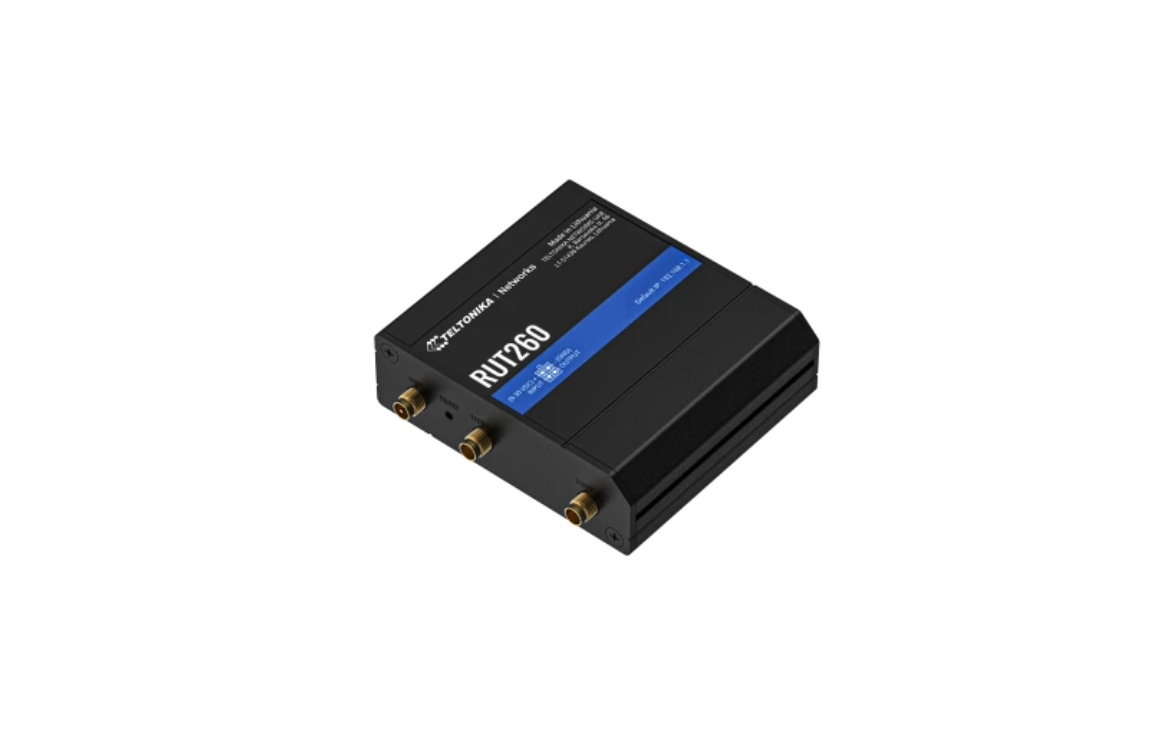
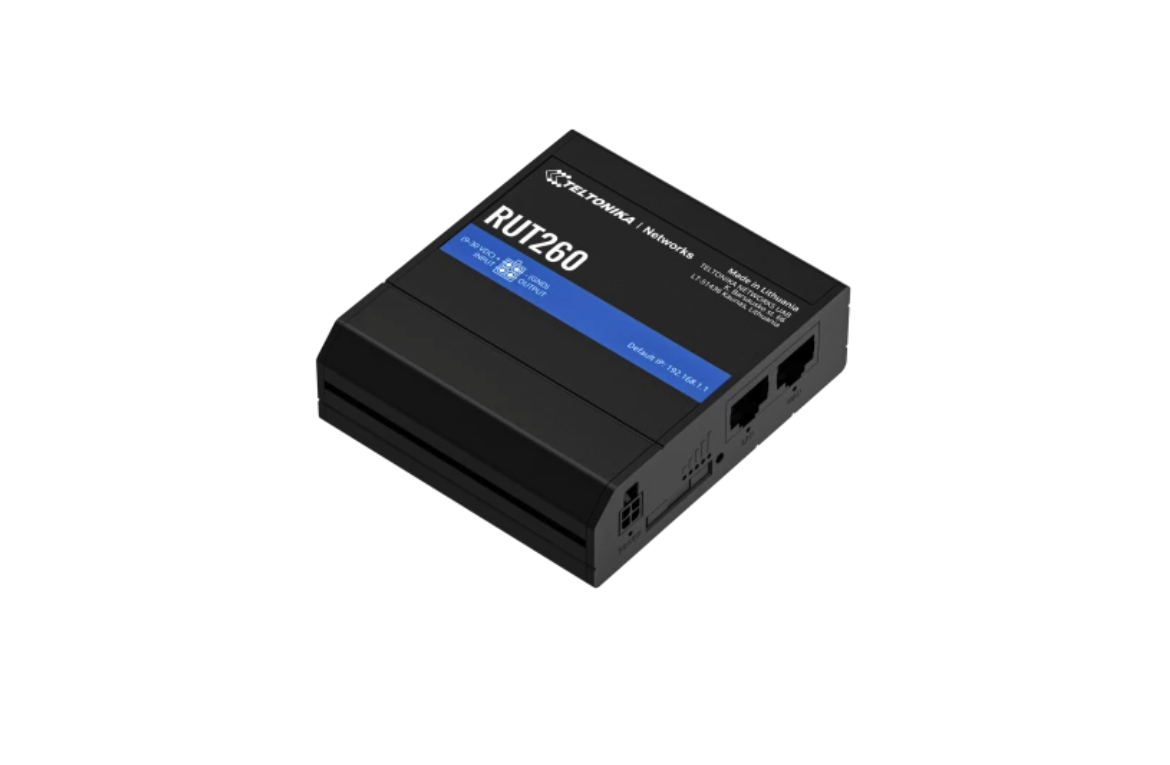
RUT260 ist ein Teltonika Networks LTE Cat 6 Mobilfunkrouter mit WAN Failover. Dieser Mobilfunk-Router vereint die wichtigsten Funktionen des RUT240 und des RUT360, ist leistungsstark, leichtgewichtig und unterstützt eine Vielzahl von Industrieprotokollen, einschließlich MQTT, SNMP, Modbus und mehr.
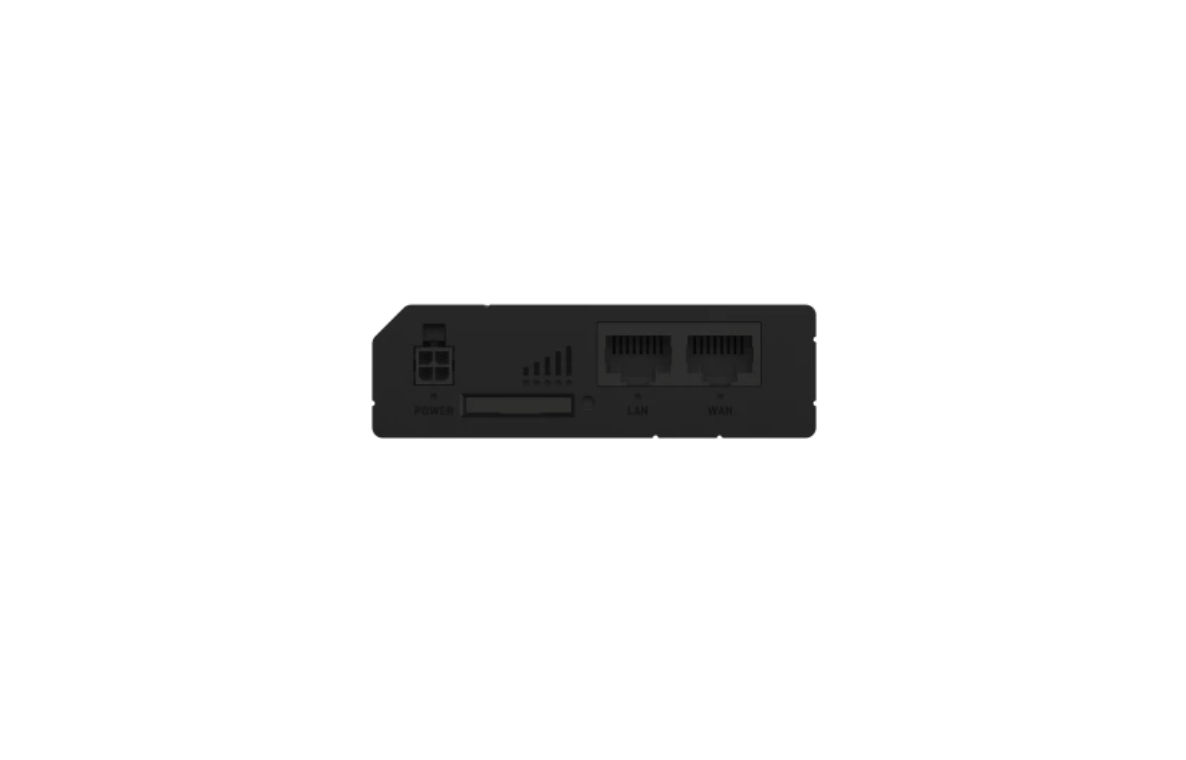
Der RUT260 verfügt über 2 Netzwerkschnittstellen und ein schnelles CAT 6 LTE Modem. Es ist also besonders gut geeignet für Anwendungen mit hohem mobilen Datenvolumen.
Die komplette Konfigurationsanleitung findet ihr hier:
Teltonika from Lithuania is one of the leading suppliers of industrial modems and network technology. The manufacturer offers a wide range of cost-effective and high-performance products for the connectivity of machines and systems.
Technical Specifications
Electrical properties
Nominal Supply Voltage:
24 V DC
Permissible Voltage Range:
9 – 30 V DC
Power Consumption:
2 Watt , 6.5 watts
Digital I/O
Digital Inputs (Quantity & Type):
1 transistor , PNP
Digital Outputs (Quantity & Type):
1 transistor (24 V DC) , Open Collector
Maximum switching capacity:
300 mA
Switching Type:
PNP input
Interfaces, protocols and connections
Antennas:
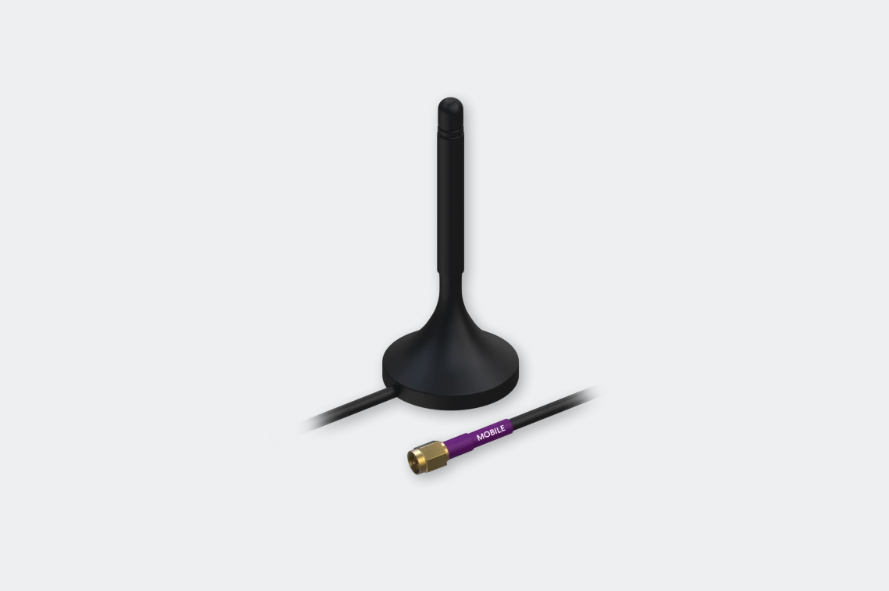
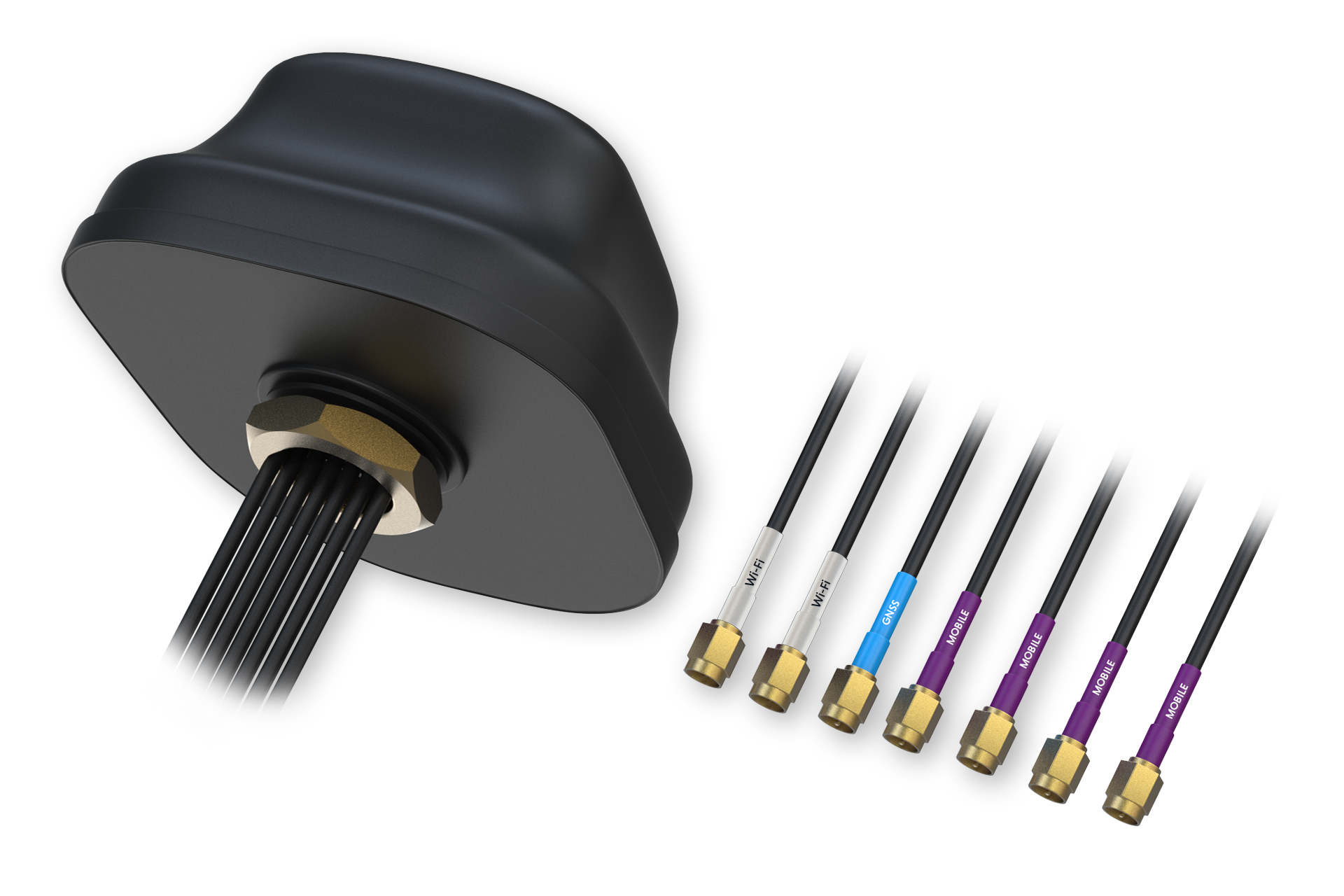
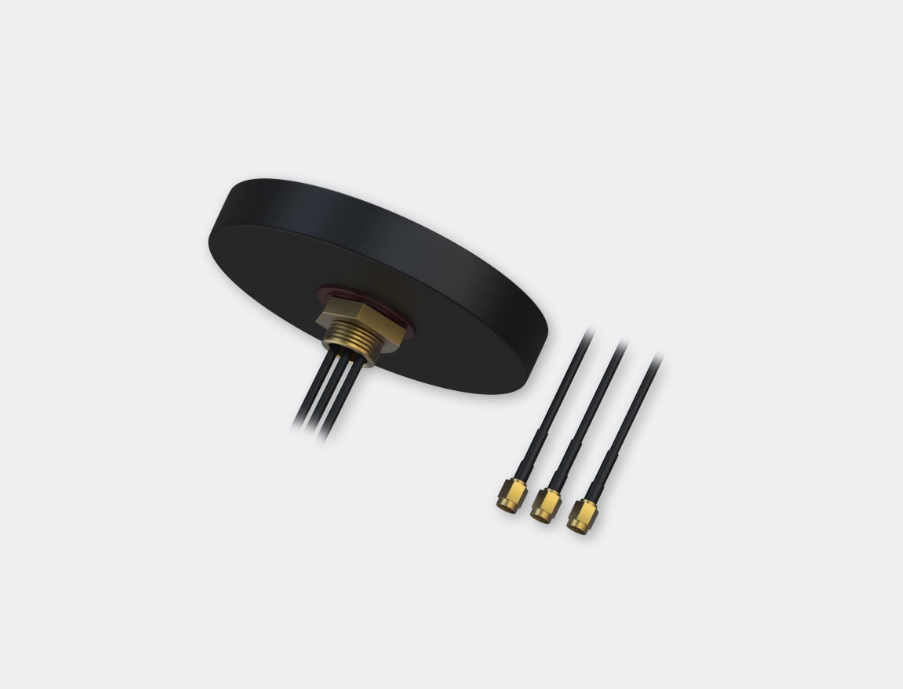
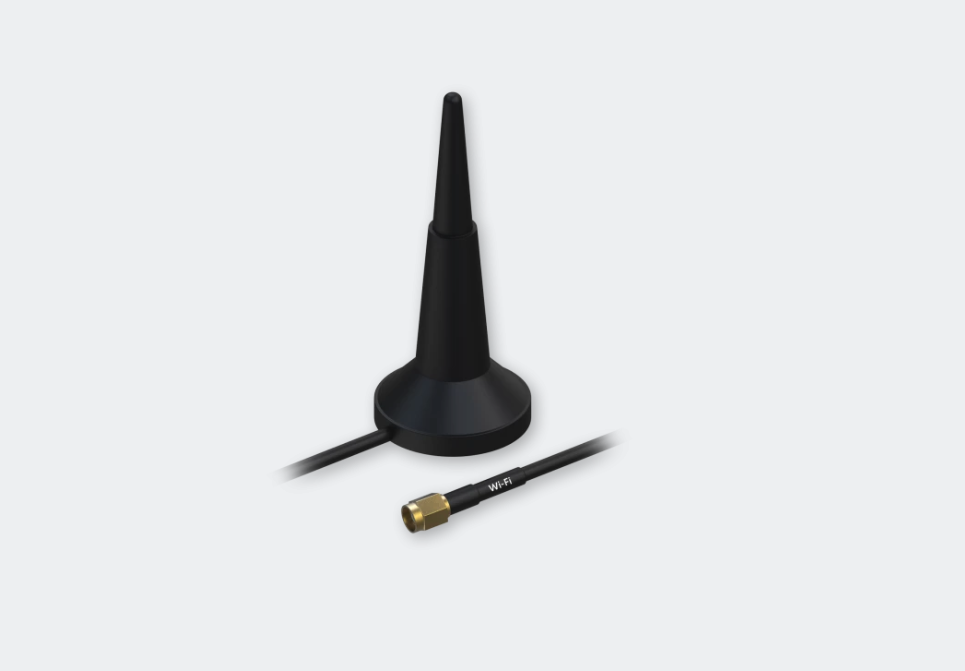
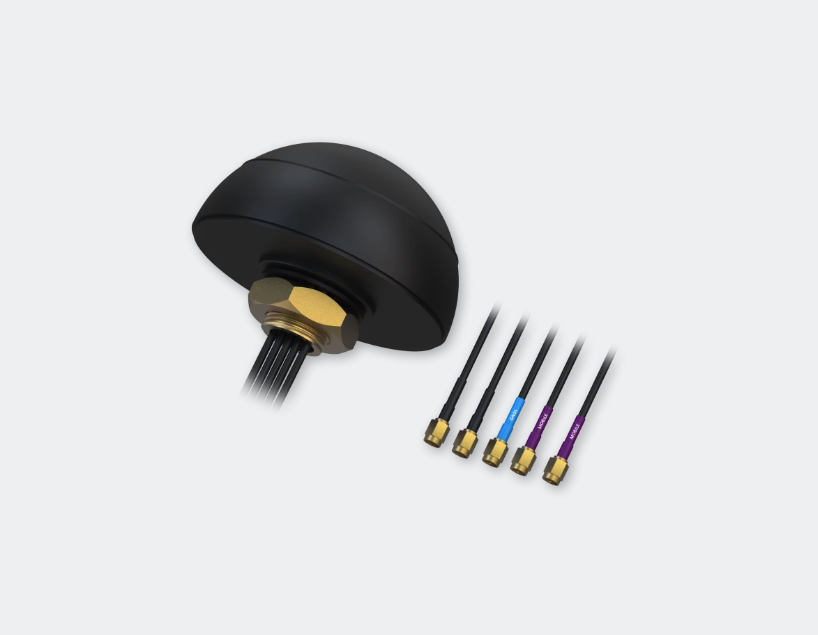
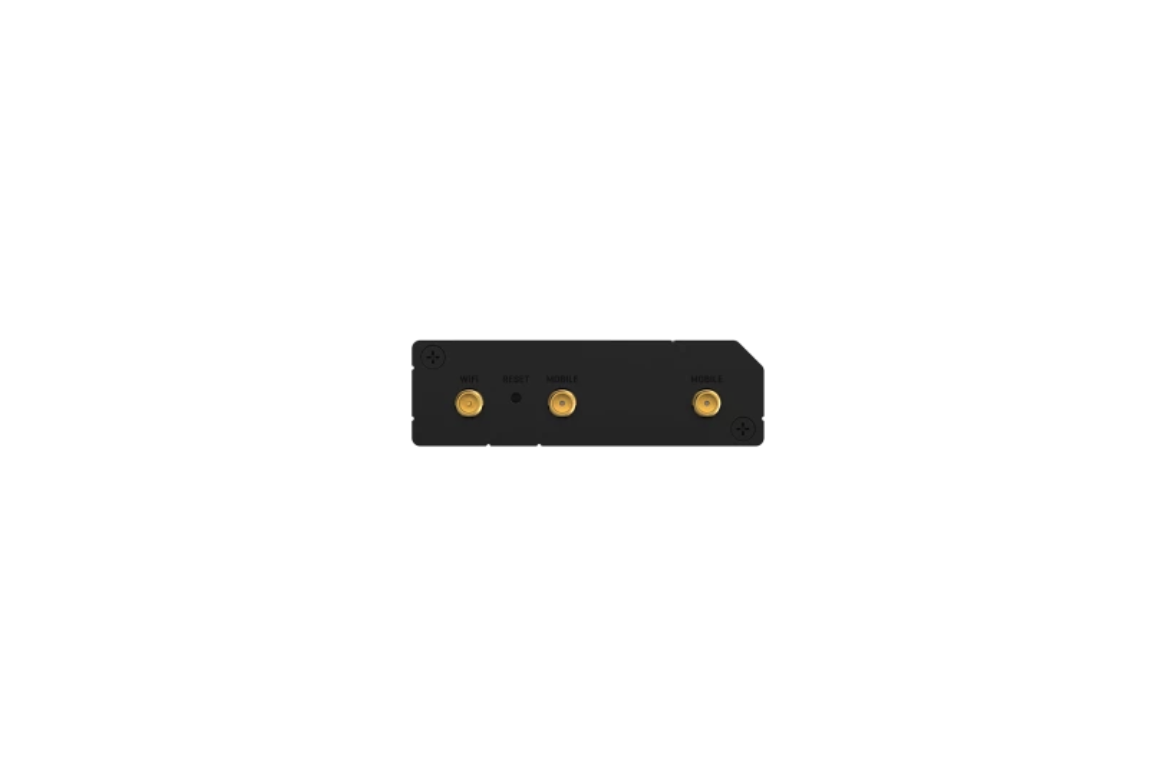
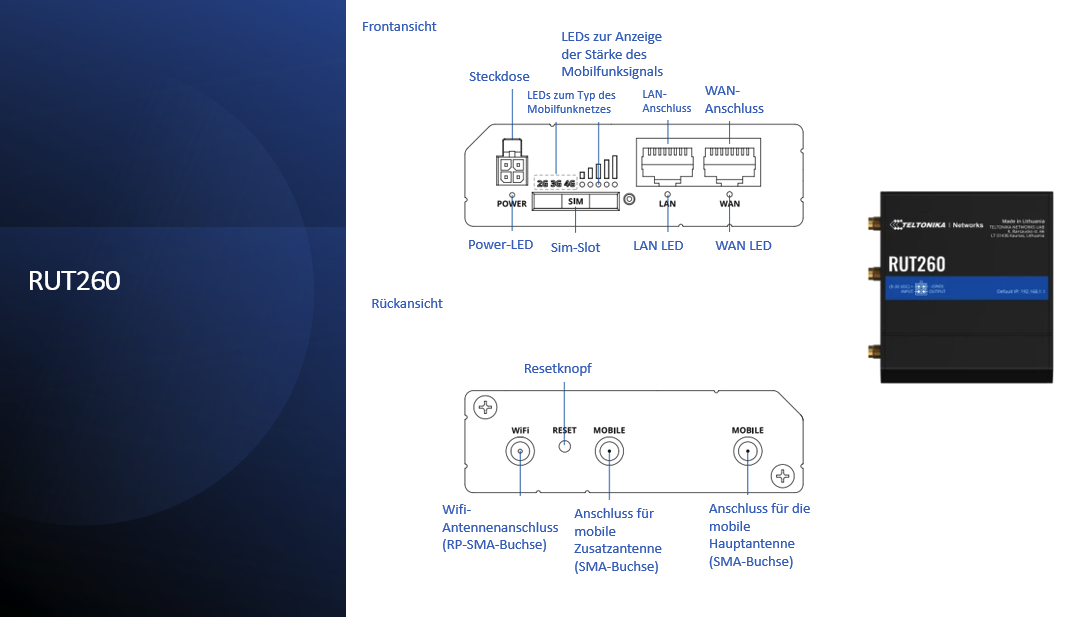
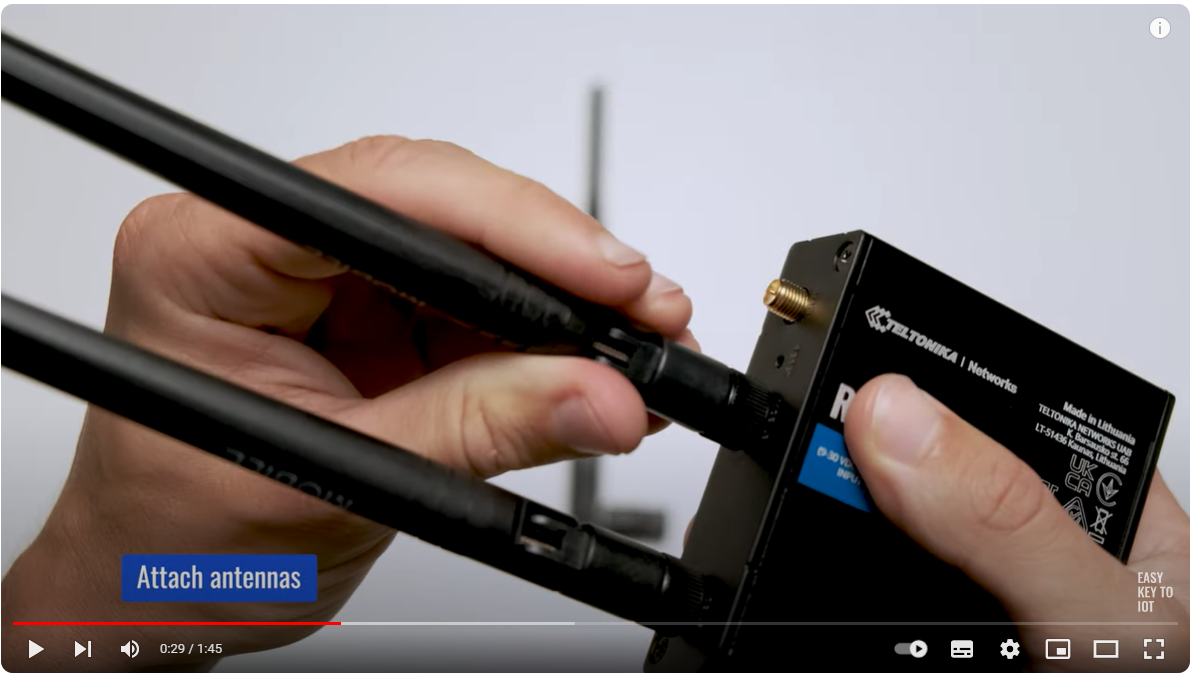
1 x SMA connection for mobile radio , 2 x SMA connection for mobile radio 1 x RP-SMA connection for WLAN
Busybox shell , C , C ++ , Java in Package manager , Lua , Python
Certifications
Standards and Certifications:
CE//UL/CSA safety/RCM/CB
0 of 0 reviews
Leave a review!
Share your experiences with other customers.
Login
Login or Register with...
No reviews found. Share your insights with others.
Digital Inputs
Digital inputs detect binary signals (on/off) from sensors, switches or other controllers. PNP inputs respond to a positive +24 V signal, NPN inputs to ground. Many modules support both types (PNP/NPN switchable) and adapt to different sensor types.
Digital Outputs
Digital outputs switch a voltage on or off. With PNP transistor outputs, typically +24 V DC. The quantity indicates how many loads (valves, relays, signal lamps) can be controlled simultaneously. Relay outputs are suitable for higher voltages and electrically isolated circuits.
Fieldbus and Communication Protocols
Fieldbuses are industrial network standards for real-time communication between PLCs, I/O modules, sensors and actuators.
PROFINET / EtherCAT / EtherNet/IP: Real-time capable Ethernet protocols – direct connection to Siemens S7, Beckhoff TwinCAT, Allen-Bradley and others. Modbus TCP/RTU: Simple, open standard – supported by virtually every PLC and many frequency inverters.
The protocol determines which controller can integrate the module directly without a gateway.
MQTT
MQTT ist ein Austauschprotokoll, das vor allem im IoT-Bereich beliebt ist. Es ermöglicht den Austausch von Werten und Meldungen über einen sogenannten MQTT-Broker, der diese Nachrichten an abonnierende Systeme verteilt. Es kann vor allem für den offenen Austausch von Informationen zwischen Maschinen genutzt werden.
The permissible voltage range indicates the input voltage range within which the device can be operated safely and reliably. Make sure the input voltage does not fluctuate significantly, as this could negatively affect device operation.
CE, RoHS and Further Certifications
CE: Mandatory marking for the European market – confirms compliance with all relevant EU directives (EMC, Low Voltage, RoHS). RoHS: Restriction of hazardous substances – no lead, mercury, cadmium etc. (EU Directive 2011/65/EU). REACH: Registration, evaluation and restriction of chemical substances in the EU. UL: American testing mark (Underwriters Laboratories) – relevant for the US market. EMC standards (EN 61000-6-x): Confirm electromagnetic compatibility for industrial use.
Switching Type: PNP and NPN
PNP (positive switching): The output switches +24 V to the load – European standard in automation technology.
NPN (negative switching): The output switches ground to the load – common in Asian markets.
Many inputs are PNP/NPN switchable and automatically adapt to the connected device.
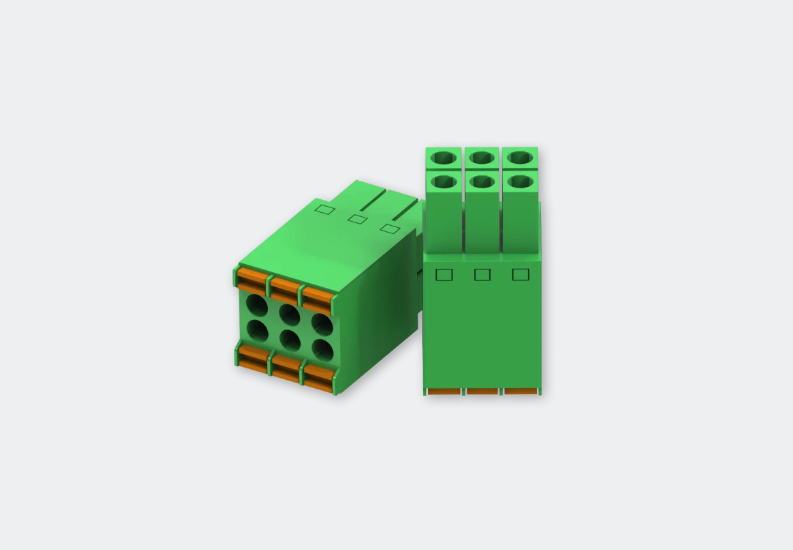
Terminal Types: Spring Terminal and Screw Terminal
Spring terminal (push-in): Simply insert the conductor – no tool required, vibration-proof, fast wiring. Recommended for installations with vibrations or frequent rewiring.
Screw terminal: Classic connection with a screwdriver – universally familiar, easy to retighten, proven in practice.
This website uses cookies to ensure the best experience possible. More information...