



Do you have questions? Our community may have already answered them!
Connect with others in our support forum.

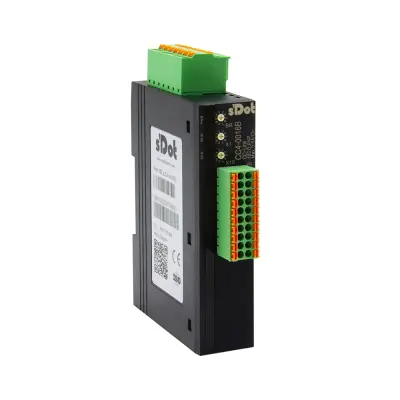
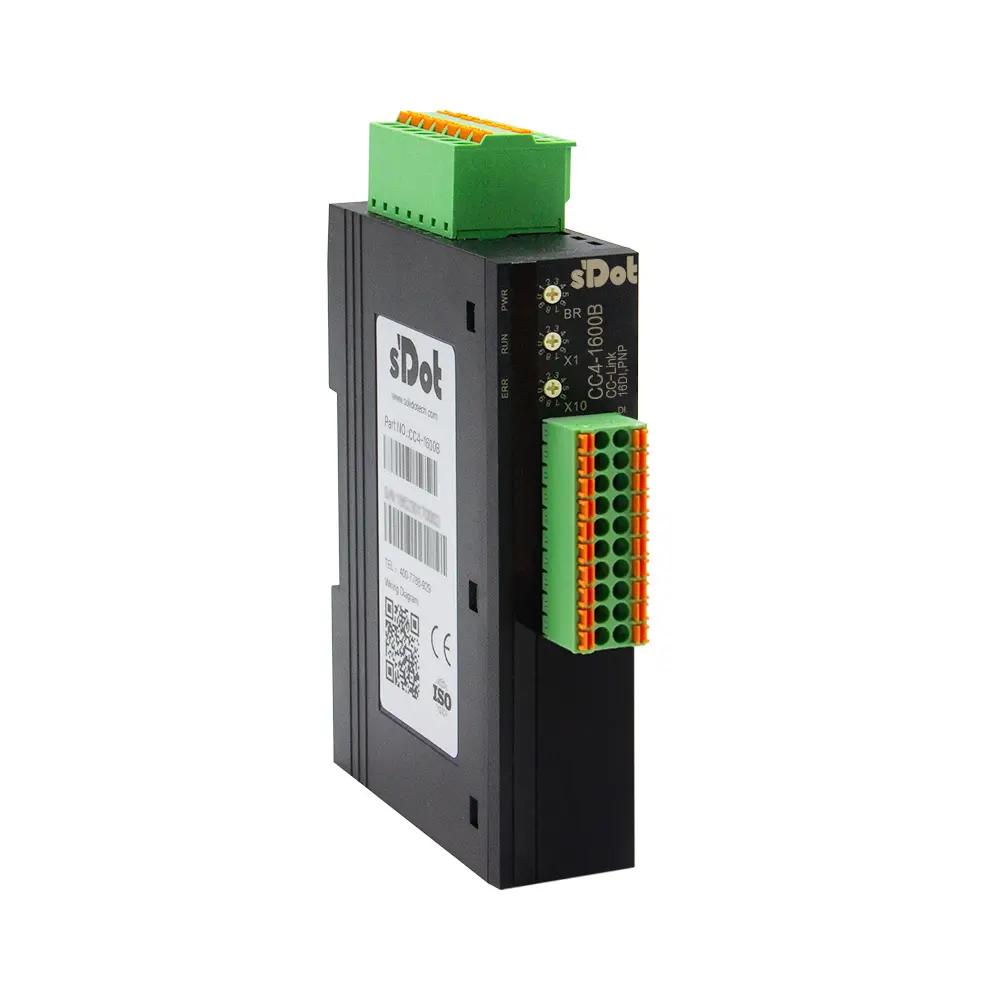
Solidot CC-Link remote I/O module CC4 with 16 digital channels
€108.63*
In stock
Lieferzeit: 3 bis 5 TageCustomers also viewed
Customers also viewed
Available, delivery time: 3 bis 5 Tage
Preis exkl. MwSt., zzgl. Versandkosten
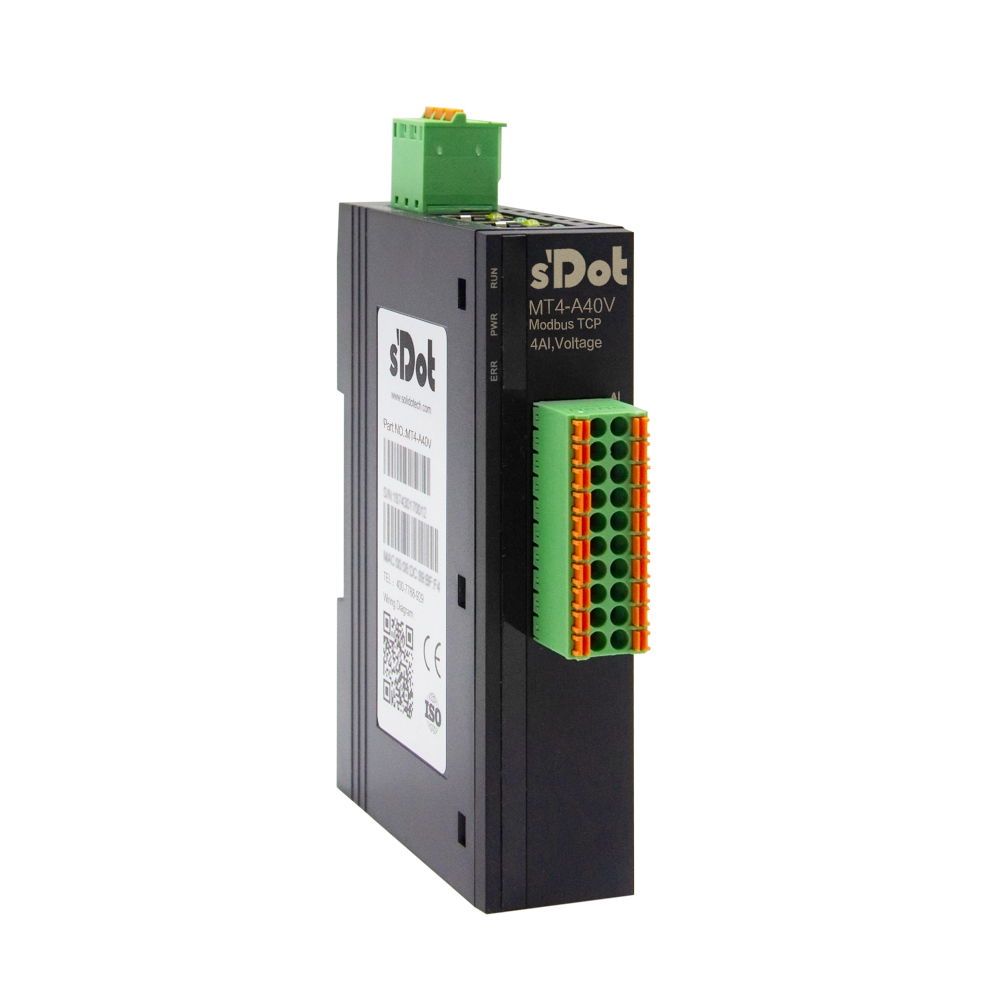
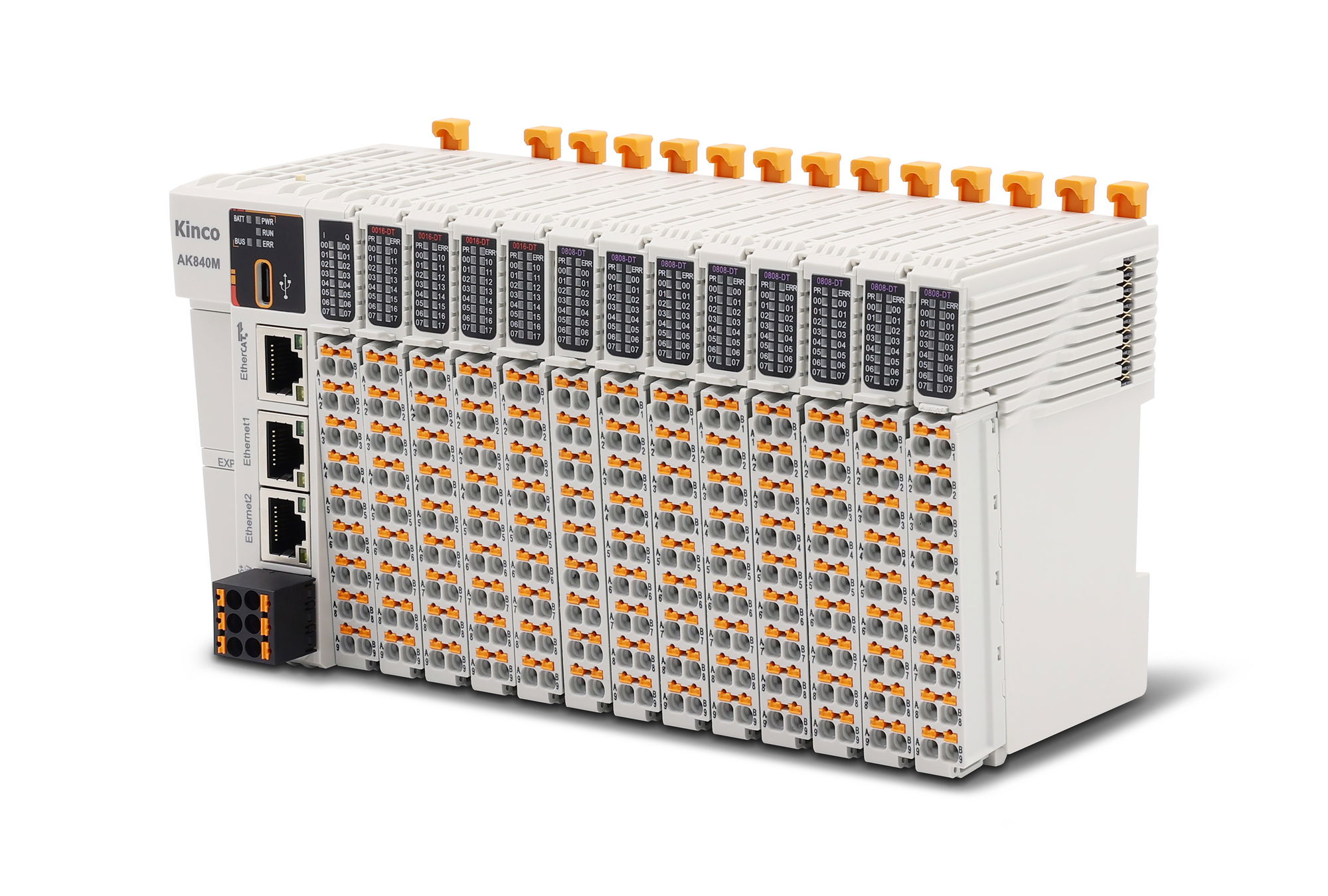
Your system runs a Mitsubishi controller on CC-Link, and somewhere you are short of 16 signals — without a bus coupler, an extra power supply or half a cabinet. That is what the CC4 is for: electronics, CC-Link port and terminals sit in one housing 25 mm wide. Set the station number on the rotary switch, enter it in the master, done.
🏭 Typical applications
Expanding a Mitsubishi system: when the slots on the Q or iQ controller are full, you add the CC4 as another station on the existing CC-Link network.
Distributed signals along conveyors: collect limit switches, photoelectric sensors and valves right at the conveyor section instead of running dozens of wires back to the main cabinet.
Replacing discontinued CC-Link remote I/O: swap the existing station, adjust the network parameters — wiring and PLC program largely stay as they are.
🔌 Versions with 16 channels
CC4-1600B: 16 digital inputs, PNP, 24 V DC, 4 mA input current
CC4-0016B: 16 digital outputs, PNP, max. 500 mA per channel, with overvoltage and short-circuit protection
CC4-0808B: 8 inputs and 8 outputs in the same housing
All inputs and outputs run on 24 V DC (18 – 30 V) and are isolated by optocouplers (500 V AC). The outputs switch resistive and inductive loads with up to 500 mA per channel and are protected against overvoltage and short circuit. A digital CC4 occupies one station.
⚙️ Core specifications
Digital I/O: PNP, 24 V DC, 4 mA input current, outputs max. 500 mA per channel
Bus: CC-Link (standard slave), 5 baud rates from 156 kbit/s to 10 Mbit/s, cable length up to 100 m at 10 Mbit/s and up to 1200 m at 156 kbit/s, dedicated CC-Link cable
Addressing: station number 1 – 64 and baud rate set by rotary switches on the device, no PC required
Power supply: 24 V DC (18 – 36 V), current consumption ≤ 50 mA, galvanic isolation 500 V AC
Environment: −10 °C to +60 °C operating, −20 °C to +75 °C storage, 95 % relative humidity without condensation, IP20
Form factor: 102 × 72 × 25 mm, 150 g, 35 mm DIN rail, pluggable spring-loaded terminals 0.3 – 1.0 mm² (AWG 22 – 17)
Diagnostics: a green LED for every channel, plus PWR, RUN and ERR on the housing
🔗 Compatibility
The CC4 works as an ordinary CC-Link slave and can be configured on all common CC-Link masters. Setup is done via the network parameters on the master — the manual walks through it step by step using a Mitsubishi Q series with GX Works2 as the example. No vendor software, no licence.
🔧 Mounting and commissioning
The module clips onto a 35 mm DIN rail. The terminal blocks are pluggable — you wire them up in the cabinet and plug them on afterwards. To swap a module in the field you pull the block, replace the device and plug the block back on without disconnecting a single wire. Set baud rate and station number on the rotary switches before powering up; after a change, switch the module off and on once. Both ends of the bus need a terminating resistor between DA and DB (110 Ω with the standard cable).
🏷️ Manufacturer and availability
Solidot (Nanjing Solidot Electronic Technology) has been building remote I/O and fieldbus components for industrial series use for years. The CC4 series is the CC-Link sibling of EC4 (EtherCAT), EI4 (EtherNet/IP) and PN4 (PROFINET) — same housing, same terminals, just a different fieldbus. spstiger is the importer of the series in the EU; technical questions are answered by us directly, without a detour via the manufacturer.
Technical Specifications
Login